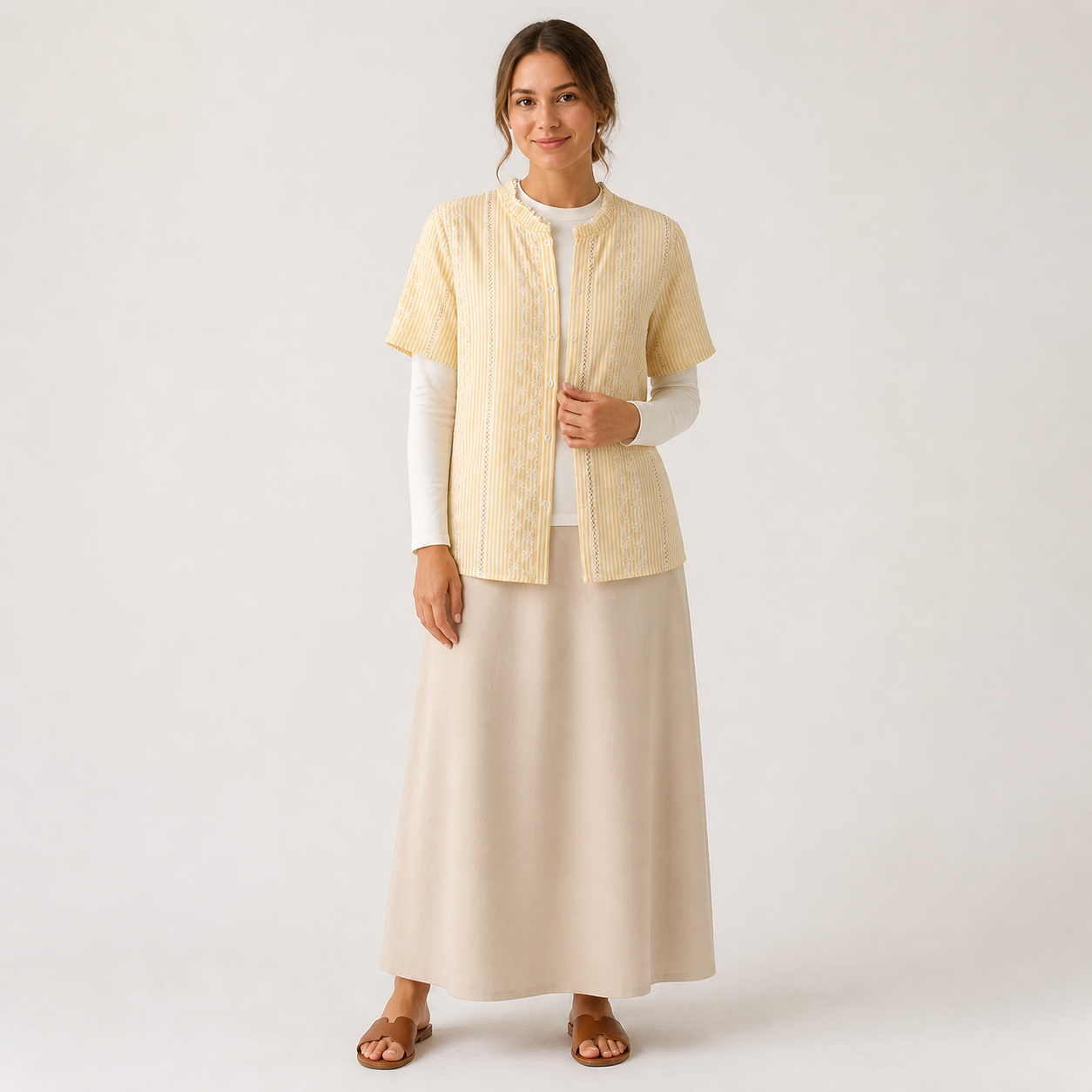
The word tsniout comes from Hebrew and is usually translated as “modesty” or “discretion.” In Judaism, it refers to a set of values and practices that cultivate restraint, dignity and respect in daily life, especially in the way men and women relate to one another. But what does this idea really include?
Tsniout is rooted in the Torah and developed through rabbinic tradition. It is understood as an important part of Jewish life: a way to protect inner dignity and build a life with holiness and meaning.
The principles of tsniout
Tsniout rests on several core principles that reinforce one another.
- The sanctity of body and mind: the body is treated as something precious, deserving respect. Tsniout encourages clothing with reserve, such as long skirts, dresses and tops that cover the shoulders, while also cultivating elevated thoughts.
- Mutual respect between men and women: it asks us to avoid inappropriate contact, intrusive looks and hurtful speech.
- Restraint and self-control: in words, actions and thoughts, tsniout encourages a person to move away from excess and return to what is essential.
Tsniout in everyday life
These principles become concrete in several areas of daily life.
- Clothing: observant women often cover the shoulders, arms, legs and, after marriage, the hair. Men are also encouraged to dress with sobriety, avoiding clothing that is overly revealing or tight.
- Speech: tsniout calls for respectful language, without vulgarity, gossip or humiliating remarks.
- Behavior: interactions are marked by restraint and respect, with attention to body language and a general posture of modesty.
- Thoughts: modesty also reaches the inner life, encouraging positive and constructive thoughts.
Why tsniout matters
Tsniout holds an important place in Judaism for several complementary reasons.
- Promoting holiness: by preserving the dignity of body and mind, it helps a person draw closer to God and shape an inner space of meaning.
- Strengthening relationships: by encouraging mutual respect, it fosters deeper connections based on emotional and spiritual qualities rather than appearance alone.
- Cultivating personal discipline: restraint requires self-control, and that discipline can positively affect every area of life.
A personal application
Tsniout is deeply personal in the way it is lived. Its practical application varies from one person to another. The goal is not to turn modesty into a performance, but to find a level of practice that is both sincere and faithful to Jewish values. Several factors influence this path.
- A person’s level of religious observance.
- Education and family environment.
- Local culture and community custom.
- Personal conviction and spiritual growth.
Tsniout in the modern world
Living with tsniout can be challenging today. Contemporary society is often saturated with images and messages centered on appearance, making restraint feel countercultural. Dress codes and social habits have also changed significantly.
Still, many people find in tsniout a source of strength and direction. Helpful steps include learning Jewish texts, seeking guidance from a trusted spiritual teacher, connecting to a supportive community and being patient with oneself. Tsniout is a path, not a destination.
Conclusion
Tsniout is a deep and multidimensional idea. It offers a path toward a life marked by modesty, restraint and respect. Far from being only a constraint, it can free a person from superficial pressures and help focus on what matters most: a more authentic relationship with God, with others and with oneself.