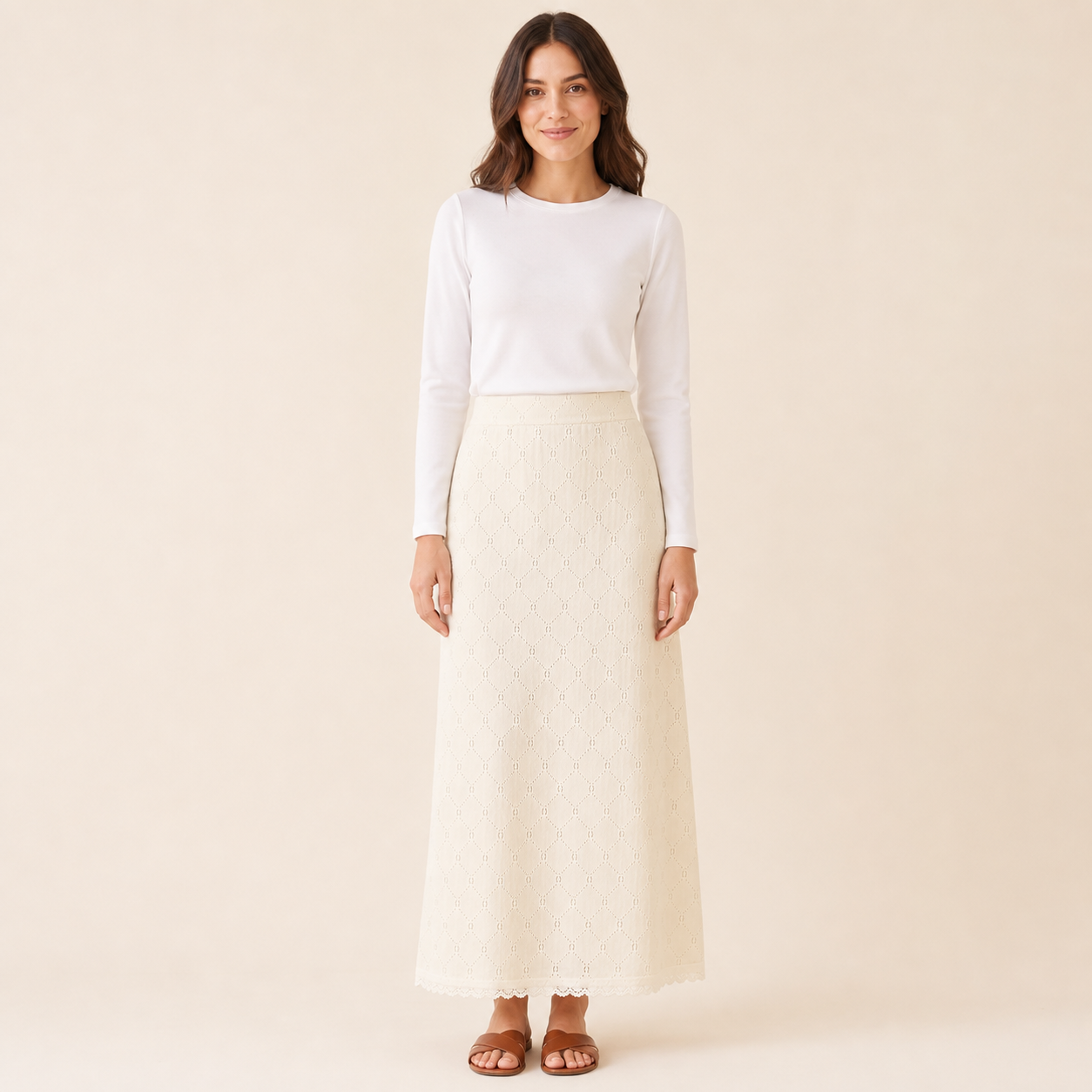
There is no ideal body shape, only skirts chosen with care. A good cut can lengthen, balance, soften or structure the silhouette. Modest dressing does not limit this work on proportions; it simply directs it toward pieces that cover the knee, stay comfortable when seated and do not rely on high slits.
Understanding your silhouette without judging it
Body-shape advice should never feel like a verdict. It is simply a way to understand where volume naturally sits on the body, so the garment can place its own volume in the right place.
- A shape: hips wider than shoulders, visible waist.
- H shape: shoulders and hips aligned, waist less marked.
- X shape: shoulders and hips balanced, defined waist.
- O shape: volume around the waist and stomach, often slimmer legs.
- V shape: stronger shoulders or bust, narrower hips.
Many women are between two categories. Use the one that feels closest; it is enough to guide your choices.
The right skirt cut for each body shape
Straight skirt
A straight skirt creates a clean vertical line. It works especially well for H and V shapes, as long as it has enough ease around the hips. A modest straight skirt should never cling.
A-line or flared skirt
This is the most universal shape. It is fitted at the waist and opens gradually, without marking the hips. It softens A shapes and brings comfort to O shapes while keeping a polished line.
If you have an A shape, add a structured top: a clean collar, a slightly marked shoulder or a knit with a firm drape can visually rebalance the silhouette.
Pleated skirt
Pleated skirts can work on many silhouettes. Fine, fluid pleats soften the line, while wider pleats in a fabric that holds its shape can add balance. The key is that the pleats should start from the waist, not pull over the stomach.
Wrap skirt
A wrap skirt can define the waist beautifully, especially on X and H shapes. For tsniout dressing, check the overlap carefully: it should not open when walking or sitting. Sewn, buttoned or lined versions are safer than a simple tied panel.
Length and waist height
A high waist visually lengthens the legs and shortens the torso. If you are petite, it is often your best ally, especially with a tucked-in top and similar colors from top to bottom.
For length, midi and maxi are the safest options. Midi works well with boots and gives structure; maxi creates a long, fluid line. Always test the skirt while seated: the knee should remain covered and the waist should not dig in.
Fabric and drape
- Fluid fabrics such as viscose, crepe or matte satin soften the line and move beautifully.
- Structured fabrics such as denim, gabardine, wool or thicker knitwear hold their shape and create controlled volume.
- Very stiff or very tight fabrics are the risky ones: one breaks the line, the other forces constant adjusting.
Common mistakes
- Trying the skirt only while standing instead of also sitting.
- Buying too large “to be safe”, then losing the waistline.
- Pairing a very wide skirt with an oversized top.
- Forgetting to check slits on straight or denim skirts.
- Ignoring the waistband, which affects comfort and coverage.
Quick recap
| A shape | A-line skirt, marked waist, fabric that glides over the hips. |
|---|---|
| H shape | Wrap or pleated skirt, light belt, gentle layering. |
| X shape | Most cuts work; wear them at the waist to keep balance. |
| O shape | Soft waist, fluid fabric, maxi length for a continuous line. |
| V shape | Pleated or slightly full skirt to balance the upper body. |
| Petite | High waist, tucked top and close tones to lengthen the line. |
The best skirt is the one you stop thinking about once you wear it: no pulling, no adjusting, no worry about length. Comfort is usually the clearest sign that the cut is right.