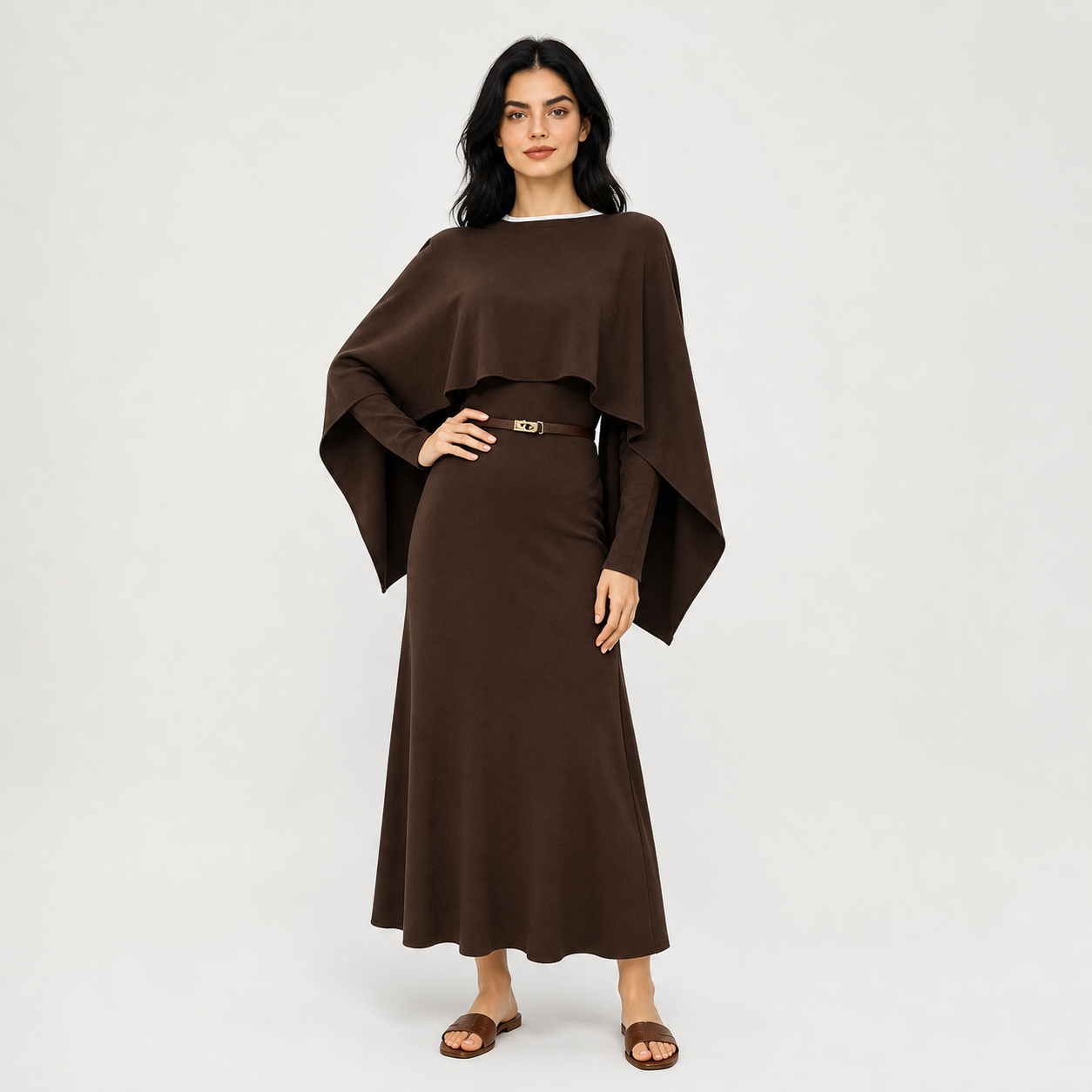
Dressing according to tsniout principles does not mean giving up elegance or femininity. Rooted in Jewish tradition, this idea of modesty and discretion values inner dignity over superficial display. Far from being a limitation, it opens the door to a wardrobe that is refined, harmonious and faithful to one’s values.
The three golden rules of a tsniout outfit
Customs differ from one community to another, but three areas usually require special attention. Once these markers are clear, dressing modestly becomes much more natural.
1. Skirt length
The skirt or dress should cover the knees, including when seated. Midi and maxi cuts are therefore safer and often more flattering.
- Choose midi or long skirts and dresses.
- Be careful with slits: if the opening rises above the knee, the garment loses its tsniout character.
2. Sleeves
Arms are generally covered at least to the elbow. Some communities accept short sleeves that cover the shoulder, while the most widespread orthodox practice asks that the elbow remain covered in every situation.
3. Neckline
The neckline should be high enough to cover the collarbone. A simple test: lean slightly forward in front of a mirror. If the eye drops below the collarbone, add a thin layering top or choose a more covering blouse.
Essentials for a modern tsniout wardrobe
A few well-chosen pieces can transform a wardrobe and make most outfits easier to wear modestly.
A covering base layer: a fitted long-sleeve or three-quarter sleeve top with a high neckline. Under a sleeveless or lower-cut dress, it instantly makes the outfit more modest.
A midi denim skirt: a timeless classic that works with sneakers, boots or a more polished blouse.
Opaque tights: according to stricter opinions, the legs remain covered. Choose at least 40 denier for real opacity.
A high-neck blouse: worn alone or under knitwear, it solves the neckline question and pairs well with both straight and pleated skirts.
Can you wear trousers?
Most orthodox authorities discourage trousers for two main reasons: they follow the shape of the body, which conflicts with modesty, and they are traditionally seen as a masculine garment. The skirt therefore remains a strong symbol of Jewish femininity. Loose and practical garments may still be relevant in private settings, for sport or at night, depending on guidance and context.
The skirt remains a strong symbol of Jewish femininity.
How to stay elegant and modern
Modesty has never been the enemy of style. On the contrary, it invites attention to quality, fabric and proportion.
- Play with fabrics: silk, linen, velvet and textured cotton add richness without revealing more skin.
- Accessorize: a beautiful belt, necklace or scarf can express personality while keeping the outfit refined.
- Master layering: a white shirt under a sleeveless dress, or an oversized cardigan over a pencil skirt, can make a look both current and modest.
Quick reference
| Skirt and dress | Covers the knee, including when seated. Midi or maxi. |
|---|---|
| Sleeves | Cover the arms at least to the elbow. |
| Neckline | High enough to cover the collarbone. |
| Slits | No opening above the knee. |
| Tights | At least 40 denier for real opacity. |
Customs vary according to community practice.
Conclusion
Dressing tsniout means preserving privacy and honoring the body through a wardrobe that inspires respect. Thanks to the growth of modest fashion, it has never been easier to combine faithfulness to values with everyday elegance.